Luxury buyers in Cayman are asking different questions than they were a few years ago. Alongside location and ocean views, they’re looking at energy efficiency, hurricane resilience, construction quality and the long-term cost of owning a home.
That’s because sustainable design isn’t simply a selling point anymore. It’s becoming an important part of what defines a well-built luxury property in the Cayman Islands.
Why sustainability now matters in Cayman luxury real estate
Sustainability in high-end property isn’t new. But its relevance in the Cayman Islands market has accelerated for three specific reasons.
First, operating costs. Air conditioning a poorly designed home in the Caribbean isn’t cheap. Buyers who’ve owned property here before, or who’ve done their homework, know that energy bills can run into thousands of dollars monthly. Efficient design, proper insulation, and smart cooling systems aren’t luxuries. They’re financial common sense.
Second, resilience. Hurricane Ivan in 2004 reset expectations around build quality. Buyers want homes that can withstand Category 5 winds, manage storm surge, and recover quickly. Sustainable architecture often overlaps with resilient architecture: reinforced structures, impact-resistant materials, elevated foundations, and water management systems that protect long-term value.
Third, buyer expectations have evolved. Luxury buyers are increasingly looking for energy-efficient homes with wellness-focused design, and many now expect these features as standard when purchasing a premium property in the Cayman Islands.
The design features affluent buyers are paying attention to
When I walk a client through a property, the questions have changed. Clients don’t simply ask about finishes and views. They’re asking about systems, materials, and performance.
Solar integration and energy efficiency
Solar isn’t exotic in Cayman anymore. It’s practical. The island gets abundant sunshine, and grid electricity is expensive. High-end homes are increasingly being designed with integrated solar arrays, battery storage, and smart energy management systems that reduce reliance on CUC and lower monthly costs significantly.
The best implementations are architecturally seamless. Panels are roof-integrated or positioned to avoid visual clutter. Battery systems are tucked away. The result is a sophisticated home that performs quietly while delivering measurable savings.
Cooling systems for island climates
Traditional air conditioning is a blunt instrument. Sustainable luxury homes are using smarter approaches: high-performance insulation, reflective roofing materials, cross-ventilation design, ceiling fans in strategic locations, and zoned cooling systems that don’t waste energy conditioning unused spaces.
Some of the most impressive properties I’ve seen use passive cooling techniques borrowed from traditional Caribbean architecture, combined with modern HVAC technology. The result is a home that stays comfortable without the energy penalty.
Hurricane-conscious materials and build quality
Resilience and sustainability intersect here. Impact-resistant windows, reinforced concrete construction, corrosion-resistant fixtures, and elevated designs aren’t just about surviving storms. They reduce maintenance, extend lifespan, and protect value.
Buyers are also paying attention to water management: proper drainage, cisterns for rainwater collection, and landscaping that manages runoff rather than fighting it. These features matter in a market where climate risk is a possibility.
Wellness-led design and indoor-outdoor living
Sustainability in luxury real estate has expanded beyond energy efficiency into wellness. Natural light, indoor air quality, non-toxic materials, and biophilic design (integrating natural elements) are now standard expectations in premium properties.
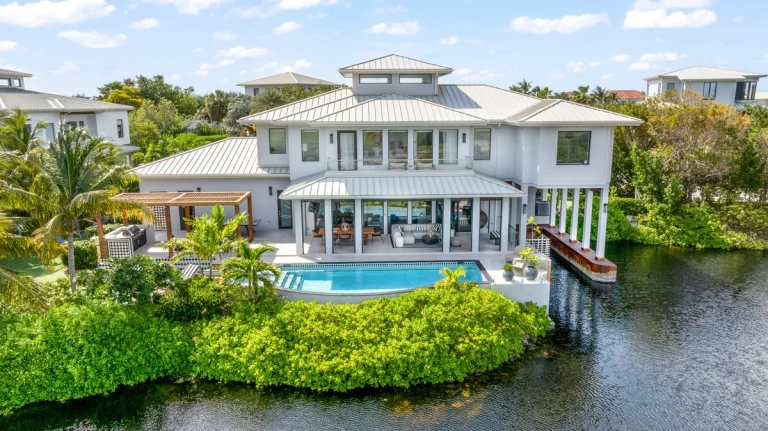
The best eco luxury real estate in Cayman always blurs the line between indoor and outdoor living. Large sliding glass walls, covered terraces, outdoor kitchens, and landscaping that provides shade and privacy all contribute to a lifestyle that feels connected to the environment without sacrificing comfort.
How resilience and efficiency support long-term property value
Luxury real estate is still an investment. And like any investment, performance matters.
Properties with strong sustainability credentials are holding value better and attracting more interest when they come to market. There are a few reasons why.
Lower operating costs make a property more attractive to renters and future buyers. A home that costs $1,500 per month to cool is a harder sell than one that costs $400. That difference compounds over years of ownership.
Resilient construction reduces insurance premiums and maintenance costs. Insurers are increasingly factoring build quality and storm resilience into their underwriting. A well-built, hurricane-conscious home can save tens of thousands in premiums over a decade.
Future-proofing matters in a market where building codes and environmental regulations are tightening. Properties that already meet or exceed emerging standards won’t need expensive retrofits down the line.
Resale implications for future buyers
The buyers entering the Cayman market today are more informed than ever. They’re comparing properties not just on location and aesthetics, but on performance and long-term cost of ownership.
A property with outdated systems, poor insulation, and high energy consumption will struggle to compete with newer, more efficient homes. The gap in desirability is widening, and it’s showing up in pricing.
Green building in Cayman isn’t a niche anymore. It’s becoming the baseline expectation for premium properties.
Where sustainable luxury is showing up in the Cayman market
This shift is visible everywhere, but it’s most pronounced in new developments and high-end custom builds.
The Mandarin Oriental Residences, launching in 2028, are incorporating sustainability into their design from the ground up. Energy-efficient systems, water conservation, and resilient construction are part of the offering, not afterthoughts.
Custom builds in areas like Rum Point, North Side, and the East End are increasingly being designed with sustainability as a core principle. Buyers working with architects who understand tropical design are creating homes that perform beautifully in Cayman’s climate while minimising environmental impact.
Even in established areas like Seven Mile Beach, older properties are being renovated with efficiency upgrades: new HVAC systems, solar installations, impact windows, and smart home technology that reduces waste.
The market is rewarding these investments. Properties that can demonstrate lower operating costs, resilient construction, and modern efficiency standards are moving faster and commanding stronger prices.
What buyers should ask when assessing a premium eco-conscious property
If you’re evaluating a property with sustainability credentials, here are the questions worth asking.
What are the actual energy costs? Ask for utility bills from the past year. If the seller or developer can’t provide them, that’s a red flag.
What systems are in place? Solar capacity, battery storage, HVAC efficiency, insulation quality, and water management all matter. Get specifics, not marketing language.
How was the property built? Ask about materials, construction methods, and whether the build meets or exceeds current hurricane codes. A property built to higher standards will cost less to insure and maintain.
What’s the maintenance history? Sustainable homes should require less maintenance, not more. If a property has a long list of repairs despite being relatively new, dig deeper.
How does it compare to similar properties? Look at energy performance, operating costs, and resale trends for comparable homes in the area. The best resilient luxury home design should outperform the average.
The bottom line for sustainability
Sustainability in Cayman luxury real estate is about smarter design, better performance, and stronger long-term value.
The properties that get this right are the ones that will define the next decade of high-end real estate on the island. They’ll cost less to run, hold value better, and appeal to the increasingly sophisticated buyers entering this market.
If you’re considering a purchase or investment in Cayman, this is a conversation worth having early. The right property, designed with resilience and efficiency in mind, will serve you far better than one that prioritises aesthetics alone.
Ready to explore sustainable luxury opportunities in the Cayman Islands? Reach out to discuss properties that combine performance, design, and long-term value.