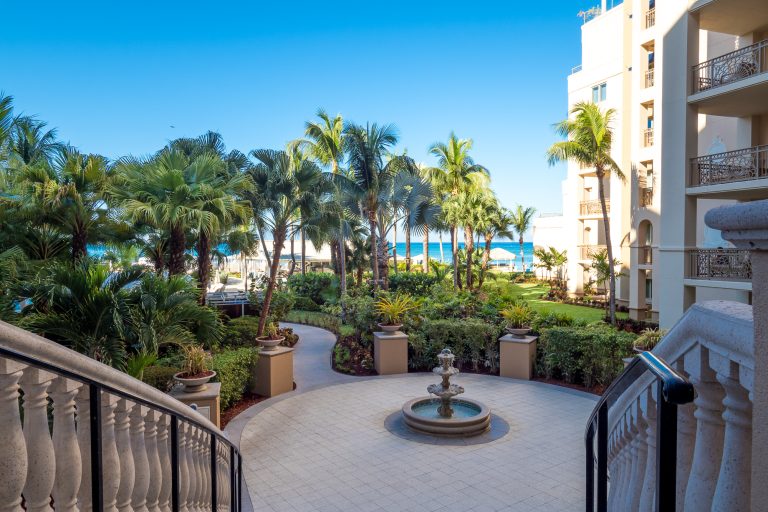
A tour of a branded residence shows you the amenities. But it rarely shows you the operation behind them, and the operation is what you are buying into. When I walk branded residences in Cayman with a buyer, I’m less interested in the lobby than in three questions: who is accountable for the service, how maintenance gets done, and what the documents say about how owners may use their home.
A branded residence is a home sold on the open market that is tied to a well-known brand, usually through both its design and its servicing. In Grand Cayman that often means a hotel name. The name tells you the standard intended. But it doesn’t, on its own, tell you how that standard is delivered.
I spent more than ten years responsible for the residences at The Ritz-Carlton, Grand Cayman, and I am now head of luxury real estate at IRG. That job taught me to look at a building on an ordinary day.
The service promise needs an accountable operator
Every branded residence promises service. The useful question is who delivers it, and who answers for it when something falls short. In some buildings the hotel operator runs the residences directly. In others, a separate management company does the work, and the owners, through their strata corporation, hold the contract. I wouldn’t assume either model for a particular development until its team or its documents confirm it.
Who receives and resolves an owner request
I ask the team to walk me through one ordinary request from start to finish. Say an owner in New York notices, on the building’s app or by email, that the air conditioning in a guest bedroom has stopped working. Who receives that message, who goes up to look, and how does the owner hear that it’s fixed?
A building that runs well can usually answer in a sentence or two, with a name or a role at each step. A building that is still working it out tends to answer in terms of the brand.
During my years at The Ritz-Carlton, Grand Cayman, one of the things I came to appreciate was that exceptional service isn’t necessarily about everything going perfectly all the time. It’s about how quickly and professionally a team responds when something doesn’t go to plan. Owners want confidence that their property is being looked after, particularly when they’re thousands of miles away. Whether it’s a maintenance issue, preparing a residence ahead of an owner’s arrival or dealing with something unexpected, good communication, accountability and attention to detail make all the difference. That’s something I still look for when advising buyers considering branded residences today.
Maintenance is visible in the response process
A finished show residence tells you very little about maintenance. The building’s back of house tells you more, and most teams are happy to show it to a serious buyer if asked. This also depends on the specific property and whether access is permitted. I would like to see where the building’s own team sits, how they plan the work that keeps it running, and what has been replaced recently or is due next.
Which procedures can be reviewed
Some of what a team tells you can be checked, and some cannot. A maintenance plan, a recent service record or a hurricane procedure can usually be put on the table. Cayman’s climate is hard on buildings, and the government’s own storm guidance starts with shutters, roof straps and roof coverings, so I ask how the building prepares before a storm and who inspects it afterwards, particularly for owners who are off the island.
An assurance that “everything is taken care of” is pleasant to hear. But a document that shows how it is taken care of is better.
Owner use is defined in documents, not a tour
How you may use your residence is set out in writing: whether you may let it and through whom, how many weeks you can stay, whether your guests may use the amenities when you are away, and what’s possible to change inside, however these details depend on the residence and can vary. A tour gives you a spoken description of those arrangements. It is often accurate. But may not be binding.
Spoken descriptions and written rules
In a strata building, the bye-laws bind every owner, and the Land Registry provides copies of registered strata plans and bye-laws as public records. A branded residence may also have a rental programme or management agreement alongside them. I ask for all of it early, and I compare it with how the buyer intends to use the home, line by line.
What those documents mean for a particular purchase is a question for the buyer’s own attorney, not for me or for any sales team. My part is to make sure the right questions reach the attorney before a contract does.
What remains for your own adviser
A good tour leaves you with fewer impressions and more answers: who runs the building, how it is maintained and what the written rules allow. The rest belongs with your attorney and your own independent advisers.
I’ve written about why international buyers choose branded residences in Cayman, about the developments people are discussing this year, and about the wider due diligence for a Grand Cayman purchase. If you’re comparing a building’s written arrangements with the way you would like to live in it, that’s a conversation I am always glad to have.
Common questions about branded residences in Cayman
What is a branded residence?
A home sold on the open market that is affiliated with a well-known brand, usually through both design and servicing. In Grand Cayman the brand is often a hotel, but the arrangements behind it vary from building to building.
Are branded residences in Cayman managed by the hotel?
Not always in the same way. In some buildings the hotel operator manages the residences, and in others a separate company does so under a contract. The development’s documents, rather than the brand name, tell you which.
What should I ask for before buying a branded residence in Grand Cayman?
The registered strata plan and bye-laws, any rental programme or management agreement, the building’s maintenance plan and its storm procedure. Your attorney should also review the legal documents before you commit.