Most writing on Cayman tax advantages reads like it was written by someone who has never sat across from a family office principal trying to work out where to put eight figures.
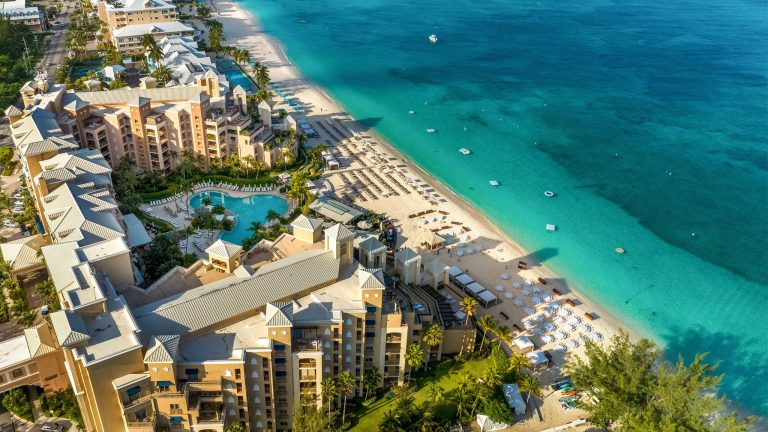
I’ve spent eighteen years advising international buyers on Cayman property. A decade of that was running the Residences at the Ritz-Carlton, Grand Cayman, where I worked with owners from New York, London, Dubai and Hong Kong who were using real estate as one piece of a much larger wealth structure. The conversation was rarely about the property alone. It was about how the property fit into residency planning, family governance, jurisdictional diversification and long-term capital preservation. That’s still an important conversation.
Why Cayman remains attractive for tax-conscious global families
Cayman’s tax neutrality is well documented. There is no income tax, corporation tax, capital gains tax or inheritance tax in the Cayman Islands. There are also no annual property taxes or rates.
That doesn’t mean the tax framework never changes. Stamp duty, for example, was increased for higher-value property transactions from 1 January 2026. The broader point is that Cayman has maintained its position as a jurisdiction without direct taxes on income, capital gains, corporations or inheritance for decades, while developing a mature legal and financial services framework around it.
For families managing wealth across multiple jurisdictions, that consistency can be an important consideration. You aren’t relying on a temporary tax holiday. You’re looking at a jurisdiction with a long-established tax framework and a financial services sector that operates within international regulatory standards.
No annual property tax vs one-time acquisition costs
Cayman has no annual property tax. Instead, buyers pay stamp duty when they acquire property. The current rates depend on the value of the transaction. From 1 January 2026, the standard rate is 3% where the consideration or market value, whichever is higher, is CI$300,000 or less; 7.5% where it is above CI$300,000 but below CI$2 million; and 10% where it is CI$2 million or more. (The CI$2 million threshold is approximately US$2.5 million.)
That makes the calculation worth doing before you start looking at properties. A CI$5 million property, for example, would attract CI $500,000 in stamp duty at the current 10% rate, equivalent to approximately US $625,000.
There are also legal fees, insurance, financing costs where applicable, and ongoing maintenance to consider. The absence of an annual property tax is one of the costs worth factoring into the longer-term ownership picture, particularly for buyers looking at a property as a long-term asset.
How real estate supports broader wealth preservation goals
Property in Cayman isn’t always purchased in isolation. For some international buyers, it sits alongside wider considerations around residency, asset diversification, family planning and where they want to spend time in the future.
Jurisdictional confidence and tax neutrality
Families with global income streams often look closely at the tax treatment of assets in each jurisdiction where they own property or investments. Cayman has no local income tax or capital gains tax, but that doesn’t mean Cayman property is automatically free of tax obligations elsewhere. The buyer’s own tax residence and the rules of their home jurisdiction still need to be considered.
It also matters for estate planning. Cayman law provides protections for Cayman trusts against certain foreign heirship claims, subject to the scope and conditions of the legislation. This can give families greater flexibility when structuring succession, although the appropriate structure depends on the family’s circumstances and should always be established with specialist legal and tax advice.
That is one reason trusts and other Cayman structures can form part of broader estate and succession planning for international families. They aren’t necessary for every property purchase, and they are not something I would recommend without the client’s legal and tax advisors being involved.
Ownership structures and family governance considerations
Some international buyers hold Cayman property through trusts, companies, foundations or other structures rather than in their personal name. Cayman has an established legal and professional services infrastructure supporting these structures, alongside regulatory requirements around beneficial ownership and transparency.
I coordinate regularly with clients’ legal and tax advisors to make sure the property acquisition fits with the structure they have already put in place. The important thing is that the ownership structure and the property work together from the outset.
This is not advice on which structure to use. That comes from your legal and tax advisors. But the property decision and the structure decision often need to be considered at the same time, and it helps to work with a real estate advisor who understands how they connect.
What international buyers should understand about residency, ownership and long-term planning
Owning property in Cayman does not automatically grant residency or Caymanian status. Immigration and residency are separate from property ownership, and the requirements depend on the category being applied for.
Property can, however, form part of certain residency applications. Cayman has specific routes for persons of independent means, including residency and permanent residence categories that have financial and real estate requirements. The applicable requirements and fees can change, so anyone considering these routes should check the current criteria before buying with residency in mind.
Cayman tax residency
Cayman does not levy personal income tax, so there is no Cayman personal income tax system in the same way you would find in countries that tax worldwide income based on tax residence. The more important question for an international buyer is usually where they remain tax resident and how spending time in Cayman, owning property here or changing their residence affects their position elsewhere.
That’s a question for your tax advisor in your home jurisdiction. Owning a Cayman property is not, by itself, a way of changing your tax residence.
Some buyers do acquire property as part of a broader plan to establish a base in Cayman through an applicable residency route. The property can support that plan, but it is not itself the residency mechanism.
How property supports lifestyle optionality and intergenerational planning
Families I work with often describe Cayman property as a place they can be if they need to be, a second home that can be rented when they aren’t using it, and a long-term asset in a jurisdiction they know well.
That optionality can also extend across generations. Parents acquire the property. Adult children use it. Grandchildren may eventually benefit from it, often through an ownership or estate-planning structure established with professional advice.
I’ve worked with families who bought at the Ritz-Carlton in 2008 and whose children are now buying homes. The property strategy spans twenty years and two generations, and the Cayman location has remained relevant to the family throughout that time.
Comparing Cayman’s stability with other global wealth hubs
Cayman competes with jurisdictions like Monaco, Dubai, Singapore and parts of the Caribbean. Each has its own tax and residency framework. What differentiates Cayman is the combination of tax neutrality, legal maturity and geographic position.
Monaco has no income tax for most residents, subject to exceptions, including certain French nationals under the applicable tax arrangements. Dubai has grown rapidly as a wealth hub, while Singapore has its own property taxes and restrictions that can apply to foreign buyers. Other Caribbean jurisdictions offer different tax and residency arrangements, so the comparison depends on the buyer’s circumstances and objectives.
Cayman is not the cheapest option. Its appeal for some families lies in the combination of its tax framework, legal system and established financial services sector. Families who value predictability over the long term may consider Cayman alongside other jurisdictions, and property can be one of the assets they acquire.
When to involve legal, tax and property advisors in one strategy
The best property acquisitions I’ve been part of involved three advisors working in parallel: the client’s tax advisor, their legal advisor and me.
The tax advisor confirms how the acquisition affects the client’s global tax position. The legal advisor advises on ownership, succession and any relevant family governance considerations. I find the property, negotiate the terms and make sure the acquisition process runs smoothly.
Those conversations need to happen before you exchange contracts. I have seen buyers acquire property and then discover that the ownership structure they used creates complications they did not anticipate. It’s easier to consider those issues at the start than to unwind them later.
If you’re considering Cayman property as part of a wealth preservation strategy, the sequence matters. Speak to your tax and legal advisors first. Understand what you are trying to achieve beyond the property itself. Then involve a real estate advisor who can work intelligently with the rest of your advisory team.
I don’t give tax or legal advice. But I have great relationships with the people who do, and I make sure the property decision supports the broader strategy. That’s the true role, and the reason families come back when they are ready to acquire their next property.