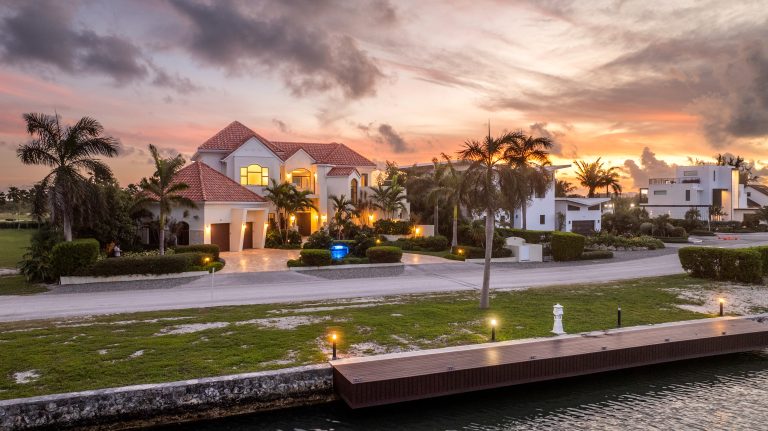
A waterfront home can look perfect in a listing. The real questions start when you look beyond the view.
I’ve been in Cayman since 2008. Before focusing on my own real estate business, I was Executive Director at the Ritz-Carlton, Grand Cayman, where I was responsible for the entire real estate portfolio, valued at approximately US$500 million.
Over the years, the questions international buyers ask when considering Cayman tend to go well beyond the property itself. They often want to understand how a purchase fits into residency planning, family governance, jurisdictional diversification and long-term capital preservation. Those are the wider considerations that can shape a Cayman property decision.
There are three things I look at that can make the difference between a waterfront address and a waterfront asset. None of them will tell you much from the listing photos.
Why waterfront living in Grand Cayman appeals to luxury buyers
Cayman waterfront homes offer something that beachfront property doesn’t: direct boating access without the exposure. You’re not on the sand. You’re on a canal or open water with a dock, which means you can leave at seven in the morning for Stingray City or Rum Point without touching a car.
For buyers relocating from New York or Dubai, that practicality matters more than the postcard. Waterfront property in Cayman gives you a boat-enabled lifestyle in a jurisdiction with no direct taxation, stable infrastructure, and a fifteen-minute drive to the airport. You don’t get that combination in Miami, and you certainly don’t get it in the Caribbean more broadly.
The other factor is privacy. Canal-front homes in developments like Harbour Reach, Crystal Harbour, or Governors Harbour often have controlled access and neighbours who value discretion. You’re not managing beach traffic or dealing with the public-facing exposure that comes with Seven Mile Beach oceanfront.
The difference between canal-front homes and open-waterfront property in Grand Cayman
Canal-front means you’re on a man-made waterway with direct access to the North Sound or open ocean, depending on location. Open-waterfront means you’re on the sound itself, or in rare cases, directly on the Caribbean.
Canal-front homes offer protection. The water is calmer, the dock infrastructure is easier to maintain, and you’re not taking the full force of a storm surge. Open-waterfront properties have wider views and often faster access to deep water, but they come with higher insurance premiums, more maintenance, and greater exposure during hurricane season.
A lot of buyers I work with choose canal-front. It’s an ideal ownership experience unless you’re keeping a seventy-foot yacht and need direct ocean access within minutes.
Why private dockage matters for lifestyle and convenience
Direct boating access
A private dock gives you direct access to the water from your property, without needing to drive to a marina or arrange a separate berth. For canal-front properties, the actual boating time to open water will depend on the canal, the route and the vessel, so it is worth checking the specific property rather than relying on a general journey time.
That’s part of the appeal of having a boat at home. If you use it regularly, being able to step from the house onto the dock can make a real difference to how often you actually get out on the water.
Vessel size considerations
There is no single vessel size that applies to all canal-front docks in Cayman. Dock dimensions, water depth, canal width and access can vary significantly between properties, and the appropriate vessel for a particular dock needs to be assessed on its individual specifications.
Water depth can also vary with the tide. The Cayman Islands Government’s Coastal Works requirements specifically call for information on water depths, including the depth at the end of a proposed dock, as well as a bathymetric survey showing water depths around the structure.
For a buyer with a boat, I would want the dock, canal and access route checked against the draft and dimensions of the vessel they actually intend to use. A property that works for one boat may not work for another.
Day-to-day practicality
Private dockage also means easier maintenance, fuelling, and provisioning. You’re not hauling coolers and dive gear across a car park. You’re loading from the house, which matters more than people think when they’re doing it three times a week.
Owner lifestyle fit
Not every buyer needs a dock. If you’re not a boater, you’re paying for infrastructure you won’t use, and you’d be better off with a beachfront or a canal-front home without dockage. The conversation I have with every waterfront buyer starts with how often they’ll actually use the boat, because the answer changes the shortlist completely.
What to evaluate before buying a waterfront home in Cayman
Waterfront property looks simple until you start asking the questions that affect value and usability.
Seawall condition
The condition of the seawall is an important part of waterfront due diligence, particularly where the structure is older or has been exposed to significant weather over its lifetime. I would not assume that an older seawall needs replacing simply because of its age, or put a standard replacement cost on it without knowing its construction, condition and extent.
A full seawall replacement can be a significant project, but the cost will depend on the size and design of the structure, site conditions, materials, access and the scope of the work.
The Cayman Islands Government treats seawalls as Coastal Works, and construction, reconstruction or repair can require approval. For a waterfront purchase, the condition of the seawall and the history of any work carried out should form part of the due diligence process.
Dock specifications
Check the dock’s dimensions, construction, condition and piling system, along with the available water depth and the vessel you intend to use. I would not assume that one decking or piling material is automatically better than another. The appropriate specification depends on the individual dock, its design, its environment and how it has been maintained.
The Cayman Islands Government’s Coastal Works requirements include details of construction materials and methodology, as well as information on the seabed profile and water depths.
If the dock was added after the original construction of the property, check when it was installed, what approvals were obtained and whether the current structure matches the approved plans.
Water depth and access
Water depth at the dock should be considered at different stages of the tide, particularly if you have a specific vessel in mind. The Cayman Islands Government’s Coastal Works application process requires bathymetric information showing water depths in and around a proposed dock, including the depth at the end of the dock.
The approach to the property matters too. Canal width, bends, entrance depth and other navigation considerations can affect whether a particular vessel is practical for the property.
Some canals in Cayman have different access characteristics depending on their location and configuration. Know the actual route and water depth before you buy.
Exposure and privacy
Open-waterfront homes have more exposure to wind, salt spray, and storm surge. They also have less privacy if they’re on the North Sound, where boat traffic is constant during the day. Canal-front properties are more sheltered but can feel enclosed depending on the width of the canal and the proximity of neighbouring docks.
Walk the property at different times of day. You’ll see things the listing photos don’t show.
Maintenance expectations
Open-waterfront homes can have greater exposure to wind, waves and salt spray than properties further inside a canal, although the level of exposure varies significantly by location and orientation. Canal-front properties can offer a different waterfront experience, with the width and layout of the canal affecting privacy and views.
Walk the property at different times of day. You’ll see things the listing photos might not show.
Title and due diligence points
Verify the ownership position, the extent of any rights relating to the dock and that the relevant permits were obtained when it was built. Cayman Islands Government guidance confirms that docks, seawalls, dredging and other Coastal Works at or seaward of the Mean High Water Mark require approval, and that unauthorised coastal works can result in enforcement action.
Your attorney should confirm the legal and title position during due diligence, while the appropriate technical professional can assess the condition and construction of the dock, seawall and other waterfront infrastructure. It is worth raising these points early, particularly if the property has had previous coastal works or repairs.
Which features define premium waterfront property in Grand Cayman
Premium waterfront homes in Cayman share a set of features that go beyond the dock.
Outdoor entertaining
The best waterfront properties have covered outdoor living spaces with kitchens, dining areas, and direct sightlines to the water. In Cayman’s climate, outdoor space is primary space. If the design treats it as secondary, the property feels smaller than it is.
Security and privacy
Gated access, perimeter walls, and smart security systems are standard in luxury waterfront developments. Buyers from New York and Dubai expect this, and properties without it sit longer on the market.
Views and orientation
West-facing properties get sunset views but also take the prevailing wind and weather. East-facing properties are more sheltered but lose the evening light. North-facing canal-front homes look onto the sound, which is active and scenic. South-facing properties are rare and usually more private.
Orientation affects how you use the property, not just what you see from it.
Smart-home and storm-resilient design
Hurricane-rated windows and doors, backup generators, and smart-home systems that can be monitored remotely are no longer optional in this market. Buyers want to know the property can be secured and monitored from New York or London.
Guest accommodation and storage
Separate guest suites, staff quarters, and dedicated storage for water sports equipment are common in premium waterfront homes. If you’re entertaining regularly or hosting family, these features move from nice-to-have to essential.
How waterfront homes in Cayman compare with Miami and Dubai for global buyers
I take calls from buyers comparing Cayman with Miami and Dubai frequently. The question is usually similar: why pay Cayman prices when Miami has more inventory and Dubai has newer developments?
The answer is friction.
Cayman has no income tax, no capital gains tax, and no inheritance tax. It has political stability, a legal system based on English common law, and a currency pegged to the US dollar. You can own property in your own name, there’s no restriction on foreign ownership, and the residency-by-investment programme is straightforward if you meet the threshold.
Cayman waterfront homes offer a lower-friction ownership experience for internationally mobile buyers who want a second home they can use, rent, or leave empty without constant management. That’s worth the premium.
How to approach a waterfront purchase with the right local guidance
Waterfront property in Cayman requires local expertise, not just a licensed agent. You need someone who knows which canals have depth issues, which seawalls were rebuilt after Ivan, and which developments have the best management infrastructure.
I’ve been in Cayman since 2008, and I’ve spent most of that time either running a branded residence or advising buyers on luxury property purchases. The conversation I have with waterfront buyers is not about the listing. It’s about whether the property fits how they’ll actually use it, and whether the infrastructure behind it justifies the price.
If you’re evaluating Grand Cayman luxury waterfront homes, the starting point is a private consultation where we go through your boating requirements, privacy preferences, and neighbourhood priorities. I’ll build a shortlist based on what you’ve told me, not what’s easiest to show.
Waterfront property in Cayman is a lifestyle asset, but only if you buy the right one.