When the world feels uncertain, I’ve noticed the same pattern repeat itself. Serious capital doesn’t chase noise. It doesn’t move toward whatever is performing spectacularly right now, because things that perform spectacularly have a way of correcting equally so. When genuine uncertainty arrives, the individuals who have been through it before do the same thing: they consolidate toward assets that have intrinsic utility, limited supply, and jurisdictional integrity. They stop optimising for return and start optimising for durability.
In that environment, real estate in the Cayman Islands occupies a position that becomes harder to ignore. I’ve watched it happen enough times to say that with confidence.
The reasoning has shifted and so has the conversation
Luxury real estate has always played a role in the long-term thinking of wealthy families. The foundational argument hasn’t changed: physical assets offer something financial instruments cannot, a presence in the world that is not contingent on a counterparty, a policy decision, or a market open.
What has shifted is the reasoning behind the choice of which real estate, and where.
A decade ago, many of the conversations I had with buyers centred on desirability, return and whether or not a property was oceanfront. Today, those conversations are layered differently. The families I work with, and their advisors, are asking more fundamental questions about the jurisdiction itself. About governance. About the stability of property rights. About what happens to this asset if the political environment in the country of purchase changes in ways that are difficult to anticipate.
Those questions, applied rigorously, tend to lead back to a short list. Cayman Islands real estate is always on it.
What I look for in a genuinely resilient market
After eighteen years working in this market, I’ve developed a clear view of what separates a market worth trusting from one that simply looks attractive at a given moment.
Most markets offer one or two of the characteristics that matter. Very few offer all of them.
Scarcity is the starting point. An asset that can be replicated (where supply can expand to meet demand) has a structural ceiling on its long-term value retention. Cayman’s geography does the work here that planning regulations do elsewhere. The island is small. Seven Mile Beach real estate is anchored to a fixed strip of coastline. There will not be more of it. That constraint is not a risk. It is the foundation of the market’s long-term character, and it is something I have watched hold through every cycle I’ve experienced here.
Structural desirability is the second condition, and it needs to be genuine rather than manufactured. What Cayman offers, the world-class beaches, a safe environment, excellent international schools, modern healthcare, and a community of quietly accomplished families from around the world, does not fluctuate with market sentiment. It is not dependent on a promotional cycle. It exists because the island actually delivers on what it promises, which is something I’ve been able to verify personally for going on two decades.
Jurisdictional integrity is the third condition, and the one I find most frequently underweighted by buyers until it becomes the most important thing they care about. The Cayman Islands is a British Overseas Territory with a legal system rooted in English common law, a government with a long track record of policy consistency, and no history of sudden regulatory reversal. Property rights are clear and enforceable. The framework has been tested over decades and has not surprised the people who depend on it. I have never had a client tell me that Cayman changed the rules beneath them.
Buyer quality completes the picture. Grand Cayman real estate at the top end of the market is not driven by speculative capital or leveraged buyers chasing short-term appreciation. It is driven by families who want to live here, entrepreneurs building a long-term base, and multi-generational holders who understand what they’re acquiring. When conditions elsewhere become difficult, this buyer profile does not produce panic. It produces patience. That matters enormously to the long-term character of a market.
The combination of all four is genuinely uncommon. When I encounter them together, which I do here, I consider it worth drawing attention to.
What the market is telling us right now
The Cayman Islands property market saw record transaction volumes in 2025, driven by genuine demand at the top end of the market. A portion of that activity was accelerated by buyers moving ahead of the stamp duty increase on properties above CI$2 million, which took effect in January 2026. That adjustment, which was anticipated, communicated clearly, and absorbed without disruption, is itself illustrative of how this jurisdiction operates. Policy changes here are consultative and telegraphed. They are not surprises.
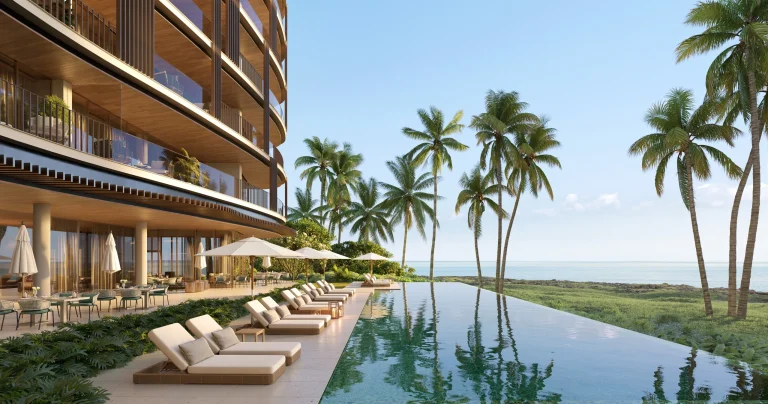
The luxury segment, anchored by Seven Mile Beach where active listings have ranged from USD 738,000 to just under USD 40 million, has maintained strong average sale values and continued to attract buyers with a long view. New developments, like The Watermark, ONE | GT, and Mandarin Oriental, are bringing high-specification inventory to a market that has historically seen demand outpace supply at the premium end. I have watched each of these projects closely, and the standard of construction and design reflects where this market is positioning itself.
This is not a market chasing growth. It is a market absorbing it carefully. That is precisely the dynamic serious buyers should be looking for.
Why Cayman property does something most assets cannot
Most assets that serve a preservation function require a trade-off. Lower return for lower risk. Liquidity sacrificed for stability. You give something up.
Cayman Islands real estate does not work that way, and it is one of the things I find myself returning to in conversations with clients who are weighing it against other options.
A beachfront home on Seven Mile Beach or a private estate in one of the island’s gated communities in South Sound delivers genuine lifestyle value. It is a place your family actually uses: for school terms, for extended stays, for the kind of unstructured time that becomes harder to find as commitments accumulate. It holds meaning in a way that most asset classes simply do not.
At the same time, it functions as a strategic asset in a stable, independent jurisdiction — offering optionality that cannot be manufactured after the fact. The families I work with who made this decision five or ten years ago now have a place, already established, with schools understood, community built, and infrastructure in place. The families who are making the decision now are creating that same optionality for themselves. The ones who are still considering it are doing so at a higher cost than they would have paid had they moved sooner.
The convergence of lifestyle value, long-term optionality, and jurisdictional stability in a single asset is genuinely rare. It is what I spend most of my professional life helping people navigate.
How I work with buyers
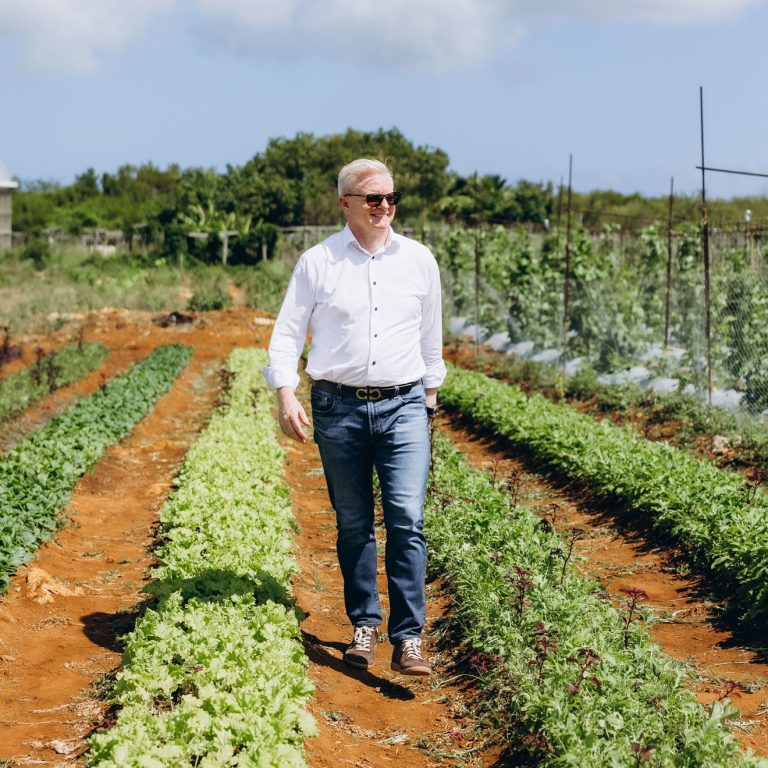
My path to Cayman Islands real estate was not a conventional one. I came here in 2008 to join the management team of the Ritz-Carlton Grand Cayman, and spent a decade as Executive Director of Residences, overseeing a portfolio valued at over half a billion dollars and working directly with the most significant buyers choosing to put down roots on the island. Before that, my career in luxury hospitality had taken me through some of the world’s most respected properties — beginning in Zurich, trained at Cornell, and through leadership roles that shaped how I think about what exceptional living actually requires.
That background is why I approach client conversations the way I do. I am not interested in the transaction. I am interested in whether this is the right decision for you, at this point in your life, for the reasons you have articulated. If it is, I will help you find the best property available, including properties that never reach a public listing, which at the top tier of the Cayman Islands property market is where the most significant opportunities tend to be. If it isn’t, I will tell you that too.
My network spans developers, private sellers, and the families who are the quiet backbone of this community. Accessing the best luxury homes for sale in the Cayman Islands requires relationships that take years to build. I have spent eighteen years building them.For buyers at the serious stage of evaluation (whether approaching Cayman for the first time or returning to it after an earlier look) I am happy to be the starting point for that conversation. Connect with me for more information.